
Hair Transplant vs GFC vs PRP: A Complete Hair Loss Treatment Guide for Men
85% of men experience hair thinning and hair loss by the age of 50. It not only affects the appearance, but quietly takes away confidence too. Hair loss leads men to avoid social settings because of the fear of judgment and embarrassment.
However, modern dermatology and hair science have a fix for it—bringing in personalised hair growth solutions which significantly target hair loss and thinning. Three best and most effective solutions to hair loss are: Hair Transplant, GFC (Growth Factor Concentrate), and PRP (Platelet-Rich Plasma) therapy, each with its own benefits and procedures.
This guide breaks down the differences, benefits, and everything about each of these treatments so you can make an informed decision about restoring your hair and confidence.
How Does Hair Loss Affect Men?
Male pattern hair loss is characterised by androgenetic alopecia (pattern baldness), driven by DHT — a derivative of testosterone — shrinking the hair follicle over time. This is the most common genetic cause of hair loss, affecting 95% of men. It’s visible in the form of a receding hairline and thinning at the crown.
Dihydrotestosterone (DHT) is converted into testosterone by the enzyme 5-alpha-reductase. And when DHT binds to hair follicles, it inhibits the hair growth cycle, resulting in shorter, less visible hair.
However, there are various other factors, such as genetics, hormonal changes, stress, nutritional deficiencies, medical conditions, and lifestyle habits that cause gradual thinning of hair in men.
Understanding Hair Loss Treatments
Hair loss treatments contain a science-backed formula that targets the root cause of hair thinning. A dermatologist diagnoses the hair loss pattern after careful assessment of the scalp, then recommends a personalised treatment plan.
The best three types of hair loss treatments are:
Hair Transplant
Hair transplant is a surgical procedure in which healthy hair follicles are extracted from a donor area (usually the back of the scalp) and implanted into bald or thinning areas (recipient area). The two primary techniques involved in hair transplant are FUE (Follicular Unit Extraction and FUT (Follicular Unit Transplantation). The transplanted hair sheds within 2-3 weeks and makes way for new hair growth.
Benefits of Hair Transplant
- Provides permanent hair restoration
- Creates a natural-looking hairline
- Suitable for advanced baldness
- High success rates when performed by experienced specialists
- One-time procedure with long-lasting results
Who Should Consider a Hair Transplant?
Hair transplant is ideal for men who have:
- Significant hair loss or bald patches
- Stable donor hair availability
- Realistic expectations about results
- Advanced stages of male pattern baldness
GFC (Growth Factor Concentrate)
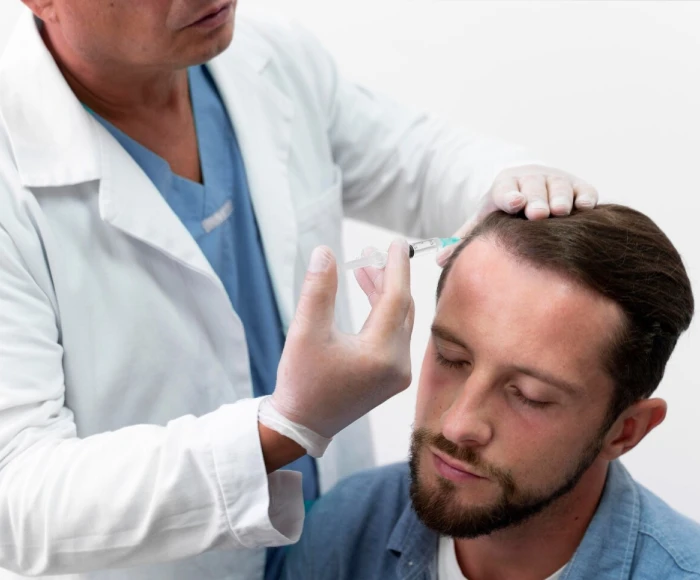
GFC is an advanced non-surgical regenerative hair treatment in which growth factors derived from the patient’s own blood are injected into the scalp, which activate the dormant hair follicles. The blood is processed in a centrifuge, and highly concentrated growth factors are separated from it. Unlike traditional PRP, GFC contains a highly concentrated and purified formulation of growth factors, making it a more targeted treatment.
Benefits of GFC Therapy
- Promotes stronger and healthier hair growth
- Reduces hair fall effectively
- Enhances hair density and thickness
- Minimally invasive with little discomfort
- Faster and more concentrated growth factor delivery
Who Should Consider GFC?
GFC works best for individuals with:
- Early to moderate hair thinning
- Seeking non-surgical treatment
- Increased hair shedding
- Weakened hair follicles
PRP (Platelet-Rich Plasma) Therapy
PRP therapy is a non-surgical hair restoration treatment in which the patient’s own blood, which contains platelet-rich plasma, is injected into the scalp. Platelets contain growth factors that provide a blood supply to weak hair follicles and reactivate hair growth. The proteins and nutrients present in platelets provide nourishment to the scalp and hair follicles.
Benefits of PRP Therapy
- Helps reduce active hair fall
- Improves hair thickness and quality
- Safe because it uses the patient’s own blood
- Minimal downtime and recovery
- Can be combined with other hair treatments
Now that you know about each of the treatments, let’s understand how they differ from each other.
Who Should Consider PRP?
PRP is suitable for men with:
- Early stage of hair loss
- Hair thinning, but not complete baldness
- Seeking a non-surgical option
Hair Transplant Vs PRP Vs GFC: Know What’s The Difference
| Factors | PRP | GFC | Hair Transplant |
|---|---|---|---|
| Type | Non-surgical injection | Non-surgical injection | Surgical procedure |
| Best for | Early thinning, maintenance | Moderate thinning, better density | Significant baldness (Norwood 3–6) |
| How it works | Platelet-rich plasma stimulates follicles | Purified growth factors regenerate follicles | Permanent follicle relocation |
| Sessions needed | 3–4 sessions + maintenance | 3 sessions + maintenance | 1–2 sessions (lifetime) |
| Downtime | None (mild redness) | None (minimal) | 7–10 days recovery |
| Results visible | 3–6 months | 2–4 months | 9–12 months |
| Permanence | Not permanent; needs upkeep | Not permanent; needs upkeep | Permanent |
| Pain level | Mild (topical anaesthesia) | Mild (topical anaesthesia) | Moderate |
What Factors Do Doctors Consider Before Choosing Any Hair Loss Treatment?
Dermatologists perform detailed scalp analysis and hair diagnostic tests to determine the most effective treatment plan.
Before deciding on any hair restoration procedure, doctors usually consider:
- Extent of hair loss
- Age and future hair loss progression
- Donor hair availability
- Budget and treatment goals
- Medical history and scalp health
- Expected maintenance requirements
Which Treatment Delivers the Best Results?
Whether GFC, PRP or a hair transplant, which one gives the best results, totally depends on the existing condition of the scalp, the doctor’s expertise, donor availability, age and extent of hair loss.
However, a dermatologist can only recommend the best treatment after an expert diagnosis of the root cause of the condition. Sometimes monotherapy doesn’t work, instead doctors rely on combination treatment plans.
What Research Studies Say About Combination Hair Restoration Therapy?
Doctors often recommend combination hair restoration therapies. Medical hair restoration therapies are often combined with surgical hair restoration procedures.
Many dermatologists recommend:
- PRP or GFC to strengthen existing hair
- Finasteride + Minoxidil are two USFDA-approved safe medicines given to patients along with PRP/GFC treatment to activate hair growth. Dutasteride and Minoxidil are medications that block the production of dihydrotestosterone, which shrinks the hair follicles.
- Hair transplant surgery is also combined with hair restoration medicines
- Follow-up GFC or PRP sessions to support transplanted follicles and improve overall density.
This comprehensive approach addresses both hair loss and hair quality, leading to more natural and long-lasting results.
Final Takeaway
Hair loss is no longer a condition that men simply have to accept. With advanced options such as Hair Transplant, GFC, and PRP therapy, it is possible to restore hair growth, improve density, and regain confidence.
At Shlok Dermatology Clinic, Dr Manisha Mareddy performs detailed scalp evaluation, prepares advanced treatments, and provides evidence-based care that helps men achieve healthier, fuller, and natural-looking hair with the most suitable treatment approach.
The technology available today is remarkable. The only thing holding most men back is ignorance about the miraculous benefits of medical treatments.
Book a consultation with Dr Manisha Mareddy (MD Dermatology) today and get a personalised hair restoration plan designed to help you achieve stronger, healthier, and fuller-looking hair with long-lasting results.
FAQs
1. What is the main cause of hair loss in men?
The primary cause of hair loss in men is androgenetic alopecia, which triggers male pattern baldness. 90% of men are affected by a combination of genetics. Male hormone testosterone converts into Dihydrotestosterone (DHT), which causes hair follicles to shrink.
2. Which is more effective for hair growth, PRP or GFC?
GFC contains a higher concentration of purified growth factors than traditional PRP, which may provide more targeted follicle stimulation. Many patients experience noticeable improvements in hair density and reduced hair fall with GFC, although results vary from person to person. Consult a dermatologist to get the best personalised hair growth treatment plan.
3. Is PRP 100 % safe?
Yes, PRP is a safe procedure, because it uses the patient’s own blood for hair growth, but it can’t be said to be 100% risk free. You may experience mild bruising, swelling or slight discomfort in the scalp, which becomes normal within 1-2 days. However, doctors don’t recommend PRP to patients with any active blood infection or those undergoing any cancer treatment.
4. I'm in my late 30s and noticing a receding hairline. Which treatment should I choose?
Minoxidil and Finasteride are two hair growth topical solutions given to men experiencing hair loss. These are oral medications that reduce DHT levels and inhibit receding hairline in men. These medicines can be combined with any hair growth procedures like PRP, GFC or hair transplant.
5. Which blood test is done to treat hair loss?
A group of blood tests are generally advised by doctors to diagnose any kind of nutritional deficiencies, hormonal imbalances, and autoimmune conditions. Common blood tests include: Vitamin D, B12, thyroid profile, hormonal panel, CBC (complete blood count), C-Reactive Protein (CRP) & ANA (Antinuclear Antibody), a test which diagnoses autoimmune hair loss such as Alopecia Areata.
6. Who is the best doctor for a hair transplant in Hyderabad?
Dr Manisha Mareddy (MD Dermatology), with 10+ years of experience across cosmetic dermatology and hair procedures, brings personalised treatment plans for hair transplant surgery in Hyderabad. At Shlok Dermatology Clinic, she integrates safe, trusted and advanced hair technology with best wellness practices for natural results.
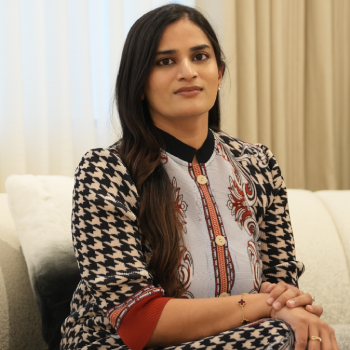
Dr. Manisha Mareddy – Dermatologist & Skin Wellness Expert
Dr. Manisha Mareddy is a leading dermatologist and founder of Shlok Dermatology & Wellness in Kokapet, Hyderabad. With over 10 years of expertise in aesthetic and medical dermatology, she is trusted for her personalized care and proven treatment approach.